Ducted · central air
Ducted & Central Heat Pumps
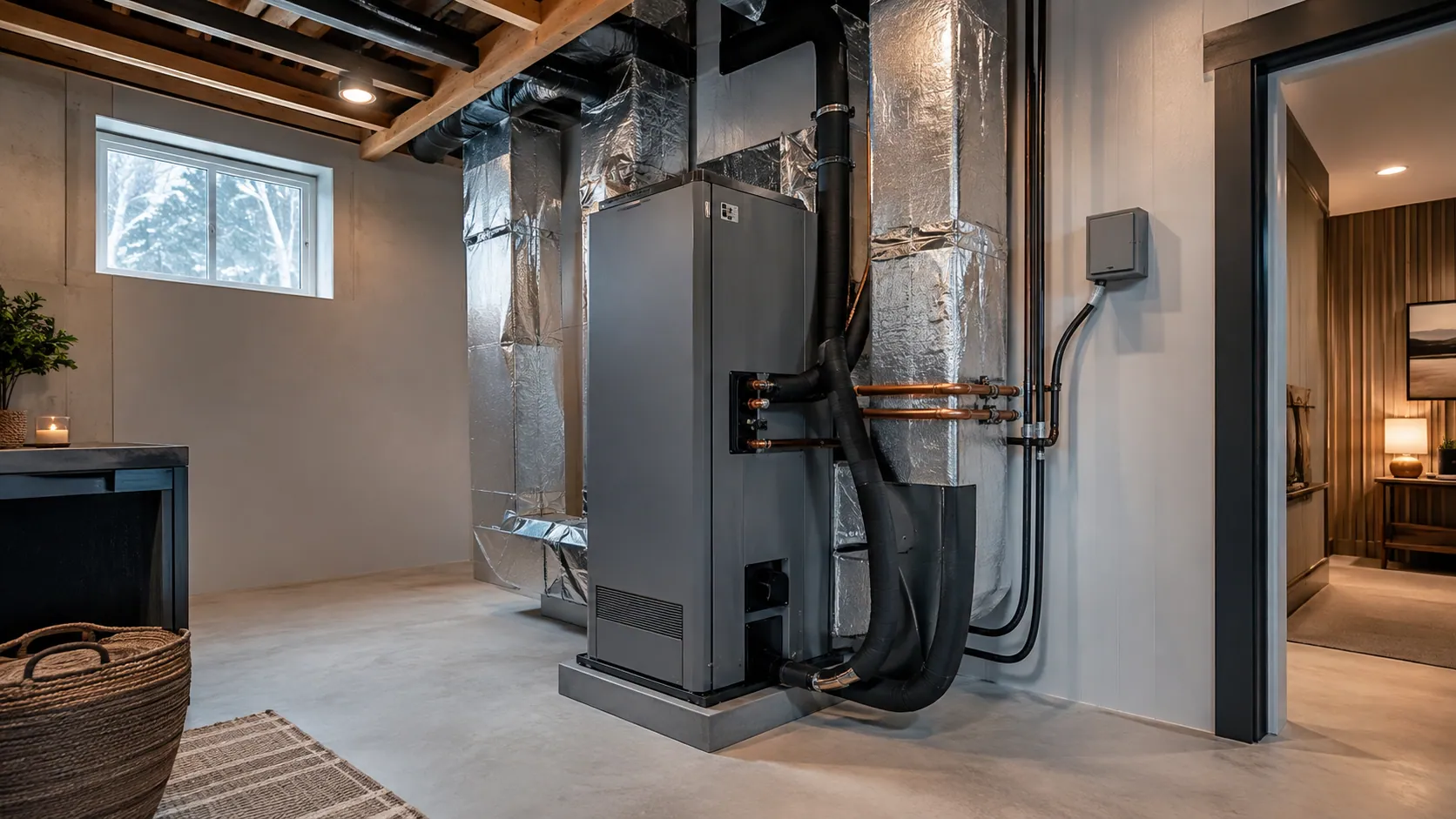
If your home already has ductwork, a ducted heat pump replaces or partners with your furnace to heat and cool every room from one central air handler. It is the cleanest way to move off oil while keeping the even, whole-home comfort you're used to.
- 300–400 %
- Efficiency gain over resistance heating
- 1–3 days
- Typical installation including electrical
- 200 A
- Service usually expected for a main heat source
Sound familiar?
Why homeowners with ducts call us
An oil furnace nearing the end
Rather than replace a furnace with another furnace, an air handler with a heat pump coil uses the same ducts and leaves oil deliveries behind.
Rooms that never match
A properly sized central system, with registers balanced room by room, gives every floor the same temperature.
Cooling without window units
Whole-home cooling and dehumidification through the registers you already have, from the same system that heats in winter.
Drag to rotate · tap a number
Inside the system
Anatomy of a ducted heat pump
The air handler takes the place of your furnace and uses the ducts you already have. Here is how the pieces fit together.
Two ways to go
Convert fully, or keep the furnace as backup
We quote both so you can compare real numbers. Either way, you keep whole-home comfort through your existing ductwork.
- 01
Full conversion to an air handler
The furnace comes out. An electric air handler with a heat pump coil and built-in backup heat strips takes its place and connects to your supply and return ducts.
Best for: Leaving oil behind completely, older furnaces, maximum rebate eligibility
- 02
Add-on (hybrid) heat pump
A heat pump coil is integrated with your existing furnace. The heat pump carries the load most of the year; the furnace steps in only on the coldest days.
Best for: Newer furnaces, keeping a fuel backup, phased budgets
- 03
Ducted with zoning
Where the ductwork allows, dampers and multiple thermostats let upstairs and downstairs run independently.
Best for: Two-storey homes with uneven temperatures
- 04
Ducted plus a ductless head
A central system for the main house and a ductless head for a garage, sunroom or addition the ducts never reached.
Best for: Homes with an addition or a room the furnace never heated well
Step by step
How a ducted installation goes
A whole-home system in one to three days, with the electrical done by the same crew.
- 1
Duct and heat-load assessment
We inspect the ductwork, measure the house and calculate the heat load so the system is sized to your home, not oversized to be safe.
- 2
The air handler replaces the furnace
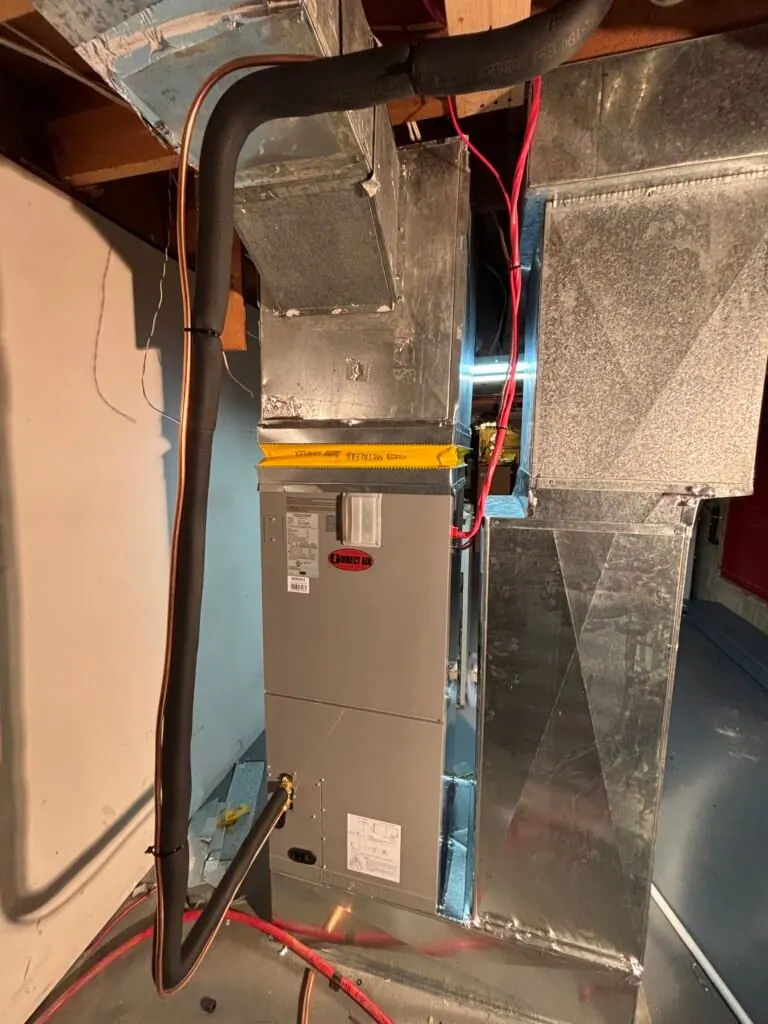
The old furnace comes out of the basement or utility room and the air handler connects to your existing supply plenum and return.
- 3
Outdoor unit, lines and electrical
The cold-climate outdoor unit is set on a pad or stand, refrigerant lines are run and insulated, and our Red Seal electricians handle the 200-amp service if needed.
- 4
Balance, controls, commissioning
Registers are balanced, the thermostat is set up, and the system is tested in both heating and cooling before we leave.
From our technicians
Straight talk about ducted systems
How it works, what it saves and where it fits, in plain English.
- 01
How it works
A ducted heat pump uses refrigerant to move heat from outside to inside in winter and the reverse in summer, compressing and expanding the refrigerant to transfer that heat.
- 02
Why it beats a furnace
Heat pumps are more efficient than furnaces, improve air quality through filtration on every pass, and run quietly and reliably. They can increase a home's heating efficiency by 300 to 400 percent over resistance heat.
- 03
Where the indoor unit lives
Ducted systems suit homes that already have ductwork. The air handler normally sits where the furnace did, in the basement or utility room.
- 04
Ducted versus split
Split systems are better for heating or cooling individual rooms and are usually cheaper. Ducted systems are better for heating or cooling an entire home evenly.
- 05
Insurance and the panel
For a centrally ducted heat pump to count as your main heat source, insurers usually expect 200-amp service. We check the panel during the quote and upgrade it as part of the same project.
- 06
Our specialty
We specialise in ducted installations, from oil-furnace-to-air-handler conversions to add-on heat pumps integrated with an existing furnace.
Is it right for you?
One system for the whole house.
- Homes with an existing oil, electric or propane furnace and ducts
- Families who want every room the same temperature
- Moving off oil: full furnace-to-air-handler conversions
- Keeping the furnace as backup with an add-on (hybrid) heat pump
- 01
Up to 3–4× the efficiency of resistance heat
Rather than making heat, a heat pump moves it. For every unit of electricity it uses it can deliver three to four units of heat — a step change from oil or electric furnaces.
- 02
Two ways to leave oil behind
Convert fully to an electric air handler with a heat pump coil, or keep your oil furnace and add a heat pump that carries the load most of the year. We quote both so you can choose.
- 03
Better air, quieter home
Central systems filter the air on every pass, run long gentle cycles and remove the smell and noise of combustion.
- 04
Insurance-ready electrical
For a centrally ducted heat pump to count as your main heat source, insurers usually expect a 200-amp service. Our Red Seal electricians upgrade panels as part of the same project.
What's included
Everything, itemized.
No vague line items. This is what a typical project with us covers.
- Heat-load calculation and duct assessment
- Cold-climate outdoor unit and matched air handler or coil
- Integration with your existing furnace where you keep it
- Refrigerant lines, condensate drainage and duct transitions
- Thermostat or smart control set-up
- 200-amp service upgrade or panel work where required
Recent work
From our job sites.
Real installations across Nova Scotia, photographed by our own crew.
Ducted heat pump air handler connected to existing basement ductwork 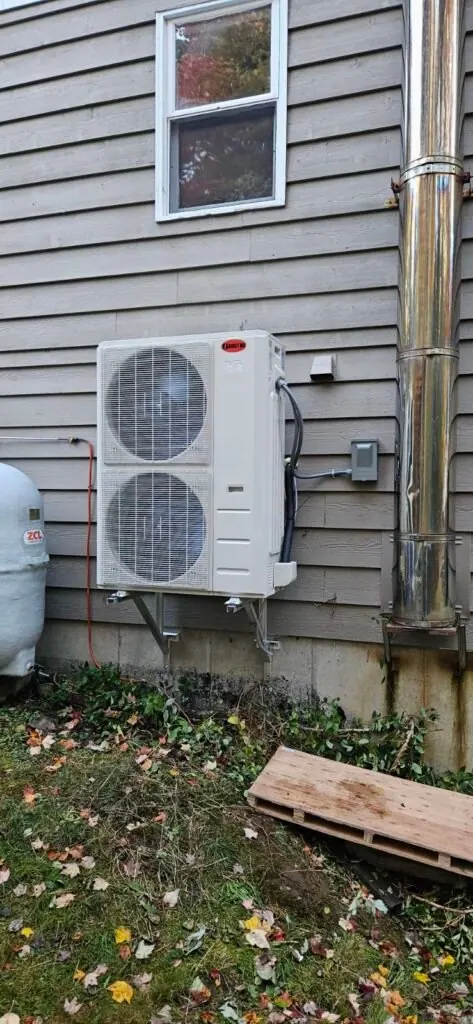
Heat pump outdoor unit installed where an oil tank once stood 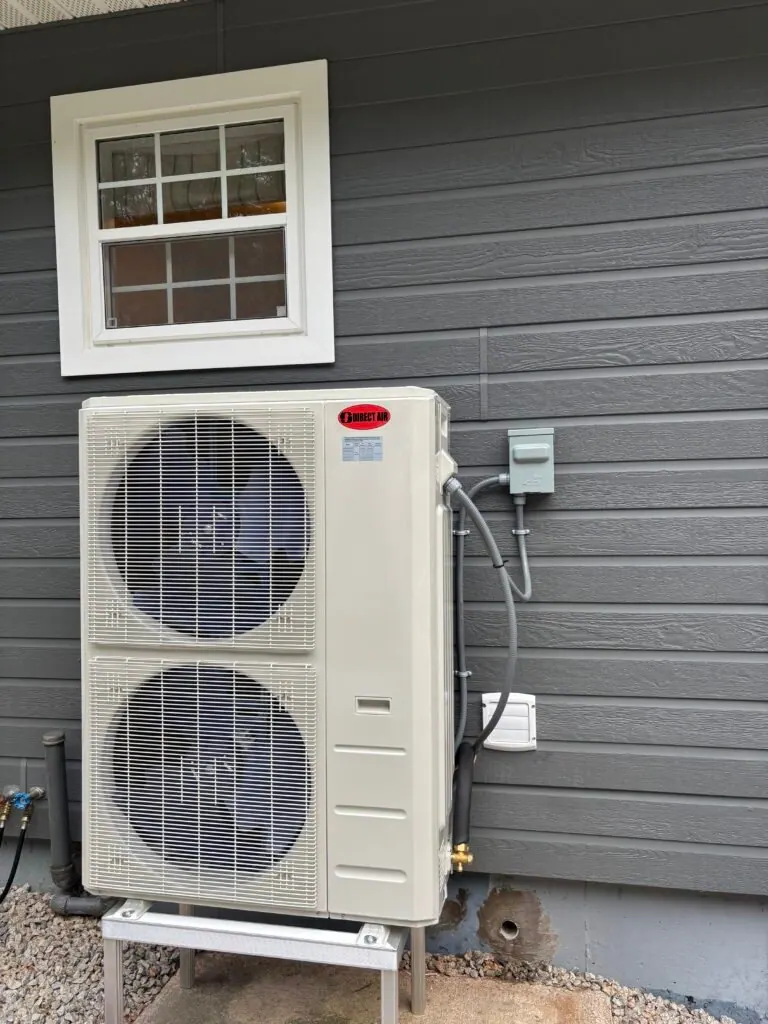
Cold-climate outdoor unit on a stand beside a Nova Scotia home
What our clients say
Comfort you can feel. Service you remember.
The service from Smart Heat Pumps was impeccable! Their technicians were knowledgeable and efficient, transforming our home's comfort level in no time.
I highly recommend Smart Heat Pumps. Their dedication to customer satisfaction and quality solutions is evident in their work and the results.
Common questions
About ducted heat pumps
If yours isn't here, call — a technician will answer it.
Can I keep my oil furnace?
Yes. An add-on heat pump integrates with the furnace: the heat pump does the work in mild and moderately cold weather and the furnace steps in only on the coldest days or as backup.
Ducted or ductless — which is better?
Ducted systems are best for whole-home heating and cooling when good ductwork already exists. Ductless systems are usually less expensive and better for individual rooms or homes without ducts. We'll assess your ducts before recommending either.
Where does the indoor unit go?
The air handler normally takes the place of the furnace in the basement or utility room, connecting to the existing supply and return ducts.
How much more efficient is a ducted heat pump than my furnace?
Heat pumps can increase a home's heating efficiency by roughly 300–400 % compared with electric resistance heat, and they eliminate oil purchases entirely in a full conversion.
More from Smart
Other ways we can help
- Ductless Mini-Split Heat PumpsSingle- and multi-zone systems for homes without ductwork.
- Heat Pump Repair & MaintenanceDiagnostics, repairs and preventive tune-ups that keep any heat pump running efficiently through Nova Scotia winters.
- Electrical ServicesRed Seal electricians for panel and service upgrades (100 → 200/400 A), generator systems, lighting, hot tubs, HVAC wiring and new construction.
- HRV / ERV Installation & MaintenanceHeat and energy recovery ventilators that swap stale indoor air for fresh air — without throwing away the heat you paid for.
- Commercial HVACDesign, installation and service of heat pump systems for shops, offices, restaurants and multi-unit buildings across Nova Scotia.
Start your comfort journey
Get a free, no-pressure quote for your home or business.
Tell us a little about your place and we'll arrange a visit, size the right system and show you exactly what it costs after rebates.
- Call or text902-220-4182
- Emailinfo@smarteheatpumps.com
- Service areaAll of Nova Scotia