Ventilation · indoor air quality
HRV / ERV Installation & Maintenance
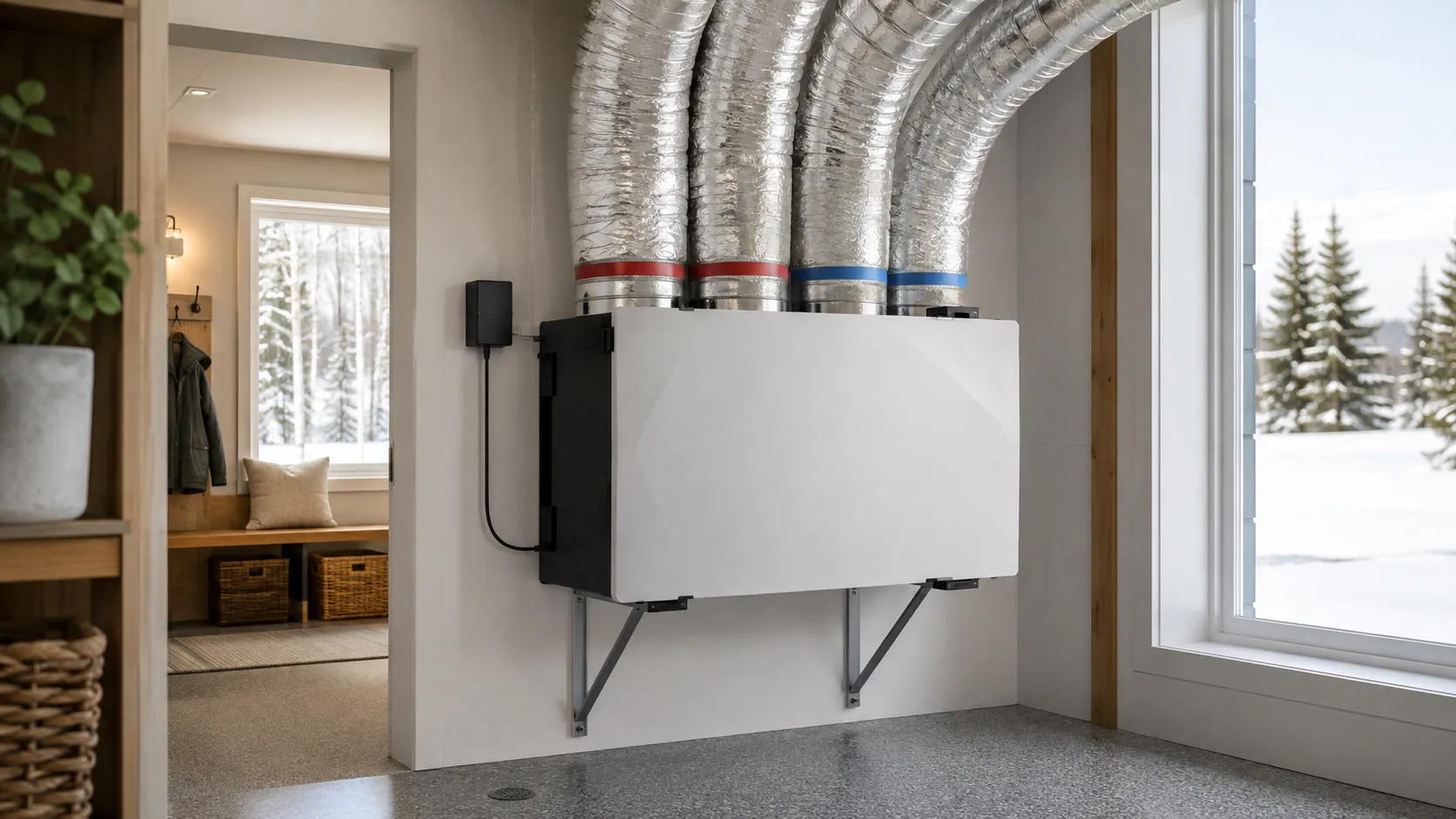
A heat recovery ventilator (HRV) continuously exhausts stale, humid indoor air and pulls in fresh outdoor air, using the outgoing air to pre-heat the incoming air. The result is a healthier, drier, more comfortable home — in tightly sealed modern houses it is essential.
- 24/7
- Continuous fresh air, quietly
- HRV or ERV
- Core matched to your home and climate
- Balanced
- Supply and exhaust set on commissioning
Sound familiar?
Why homeowners call us about ventilation
Condensation on the windows
Moisture from cooking, showers and breathing has nowhere to go in a tight house. An HRV removes it before it runs down the glass.
Stuffy rooms and lingering odours
Continuous, quiet ventilation replaces stale air with filtered fresh air, room by room, without opening a window in January.
A new home that never feels fresh
Modern homes are built airtight to save energy. Without controlled ventilation, CO₂ and pollutants build up. An HRV is how the two goals meet.
Drag to rotate · tap a number
How it works
Anatomy of a heat recovery ventilator
Two air streams cross inside the core without mixing. Stale air leaves, fresh air arrives, and most of the heat stays in your home.
Ventilation options
Heat recovery, or heat and moisture recovery
The right core depends on how dry your house gets in winter and how it is heated. We size and balance either one.
- 01
Heat recovery ventilator (HRV)
Transfers heat from the outgoing air stream to the incoming one. Removes excess humidity, which suits most Nova Scotia homes.
Best for: Homes with winter condensation or high humidity
- 02
Energy recovery ventilator (ERV)
Transfers heat and some moisture, so the house does not dry out as much in deep winter.
Best for: Homes that get uncomfortably dry, tightly sealed new builds
- 03
Retrofit into existing ductwork
The ventilator ties into your furnace or air handler ducts to distribute fresh air through the registers you already have.
Best for: Homes with a ducted heating system
- 04
Dedicated ducting
Fresh-air supply to living spaces and exhaust from bathrooms and kitchen with its own compact duct runs.
Best for: Homes heated by ductless heat pumps or baseboards
Step by step
How an HRV works, step by step
Two fans, one core, and a house that breathes without wasting heat.
- 1
Stale air is drawn from wet rooms
Exhaust grilles in bathrooms, the kitchen and laundry pull humid, stale air toward the unit.
- 2
The core recovers the heat
Outgoing and incoming air pass each other through the core without mixing. Most of the heat transfers to the fresh air.
- 3
Fresh, pre-warmed air is delivered
Filtered outdoor air, already warmed, is supplied to bedrooms and living areas.
- 4
Balanced and controlled
We balance supply and exhaust so the house is neither pressurised nor depressurised, and set controls for humidity or a schedule.
From our technicians
Straight talk about HRVs
What a heat recovery ventilator does and why maintenance matters.
- 01
What an HRV is for
A heat recovery ventilator makes your home healthier, cleaner and more comfortable by continuously replacing stale indoor air with fresh outdoor air.
- 02
Pollutants and humidity out
A properly installed, operated and maintained HRV exhausts indoor air pollutants and excess humidity outdoors while distributing fresh air throughout the house.
- 03
Heat stays home
During the heating season the HRV captures heat from the outgoing air and uses it to preheat the incoming fresh air, so ventilation costs very little.
- 04
Filters every few months
Washable filters should be cleaned every two to three months and the core once a year. We can fold this into your heat pump maintenance visit.
- 05
Balance is everything
An unbalanced ventilator pushes warm air into walls or pulls cold air through every gap. Commissioning with airflow measurements is not optional.
- 06
Long-lasting performance
We make sure your ventilation system runs smoothly, for long-lasting performance and healthier air in your home all year round.
Is it right for you?
Fresh air, without the heating penalty.
- New or recently insulated homes that feel stuffy
- Condensation on windows and lingering humidity
- Allergy sufferers who want filtered fresh air
- Existing HRVs that are noisy, dusty or unbalanced
- 01
How an HRV works
Two fans move air in opposite directions through a core where heat transfers from the outgoing to the incoming stream. During the heating season most of the heat in the exhaust air is recovered.
- 02
HRV or ERV?
An energy recovery ventilator (ERV) also transfers moisture, which helps homes that get too dry in winter. We recommend the right core for your house and climate.
- 03
Balanced and quiet
We size and balance the airflow so supply and exhaust match — the difference between a ventilator that works and one that just hums in the basement.
- 04
Maintenance that keeps air healthy
Filters, core and drains need periodic cleaning. We service HRVs and ERVs so they keep performing for the life of the home.
What's included
Everything, itemized.
No vague line items. This is what a typical project with us covers.
- Ventilation assessment and sizing
- HRV or ERV unit with insulated ducting
- Exterior hoods, balancing and controls
- Integration with your heat pump or furnace ducts where possible
- Filter and core cleaning, drain service and airflow re-balancing
Recent work
From our job sites.
Real installations across Nova Scotia, photographed by our own crew.
Heat recovery ventilator installed in a utility room with insulated ducts 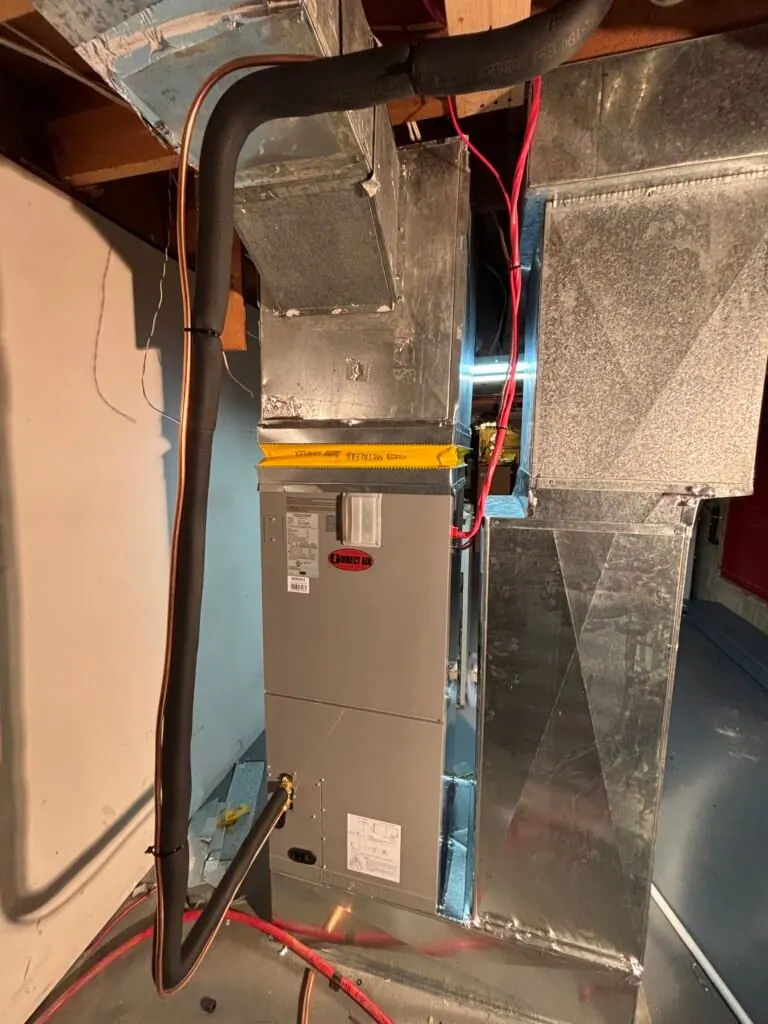
Sealed ductwork and air handler in a basement mechanical room 
Bright, fresh living room in a Nova Scotia home
What our clients say
Comfort you can feel. Service you remember.
The service from Smart Heat Pumps was impeccable! Their technicians were knowledgeable and efficient, transforming our home's comfort level in no time.
I highly recommend Smart Heat Pumps. Their dedication to customer satisfaction and quality solutions is evident in their work and the results.
Common questions
About HRV / ERV ventilation
If yours isn't here, call — a technician will answer it.
Why does my new house need an HRV?
Modern homes are built airtight to save energy. Without controlled ventilation, moisture, CO₂ and pollutants build up. An HRV provides fresh air without the heat loss of opening a window.
How often does an HRV need maintenance?
Filters should be cleaned every two to three months and the core cleaned annually. We can do this as part of your heat pump maintenance visit.
Will an HRV make my house colder?
No. Because the heat from outgoing air is recovered, the incoming fresh air arrives pre-warmed and the load on your heat pump stays small.
More from Smart
Other ways we can help
- Ductless Mini-Split Heat PumpsSingle- and multi-zone systems for homes without ductwork.
- Ducted & Central Heat PumpsWhole-home air handlers that use your existing ducts — including oil-furnace conversions and add-on heat pumps that pair with your furnace.
- Heat Pump Repair & MaintenanceDiagnostics, repairs and preventive tune-ups that keep any heat pump running efficiently through Nova Scotia winters.
- Electrical ServicesRed Seal electricians for panel and service upgrades (100 → 200/400 A), generator systems, lighting, hot tubs, HVAC wiring and new construction.
- Commercial HVACDesign, installation and service of heat pump systems for shops, offices, restaurants and multi-unit buildings across Nova Scotia.
Start your comfort journey
Get a free, no-pressure quote for your home or business.
Tell us a little about your place and we'll arrange a visit, size the right system and show you exactly what it costs after rebates.
- Call or text902-220-4182
- Emailinfo@smarteheatpumps.com
- Service areaAll of Nova Scotia